

 jobs abroad
 Remote jobs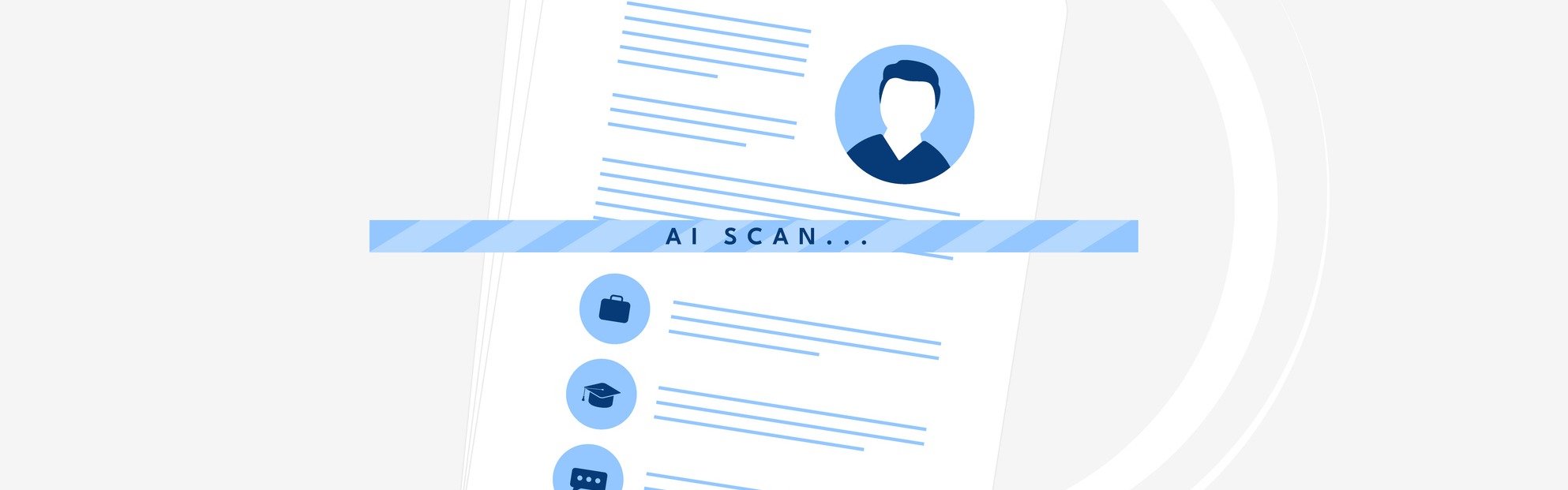
AI was supposed to help candidates write better CVs. And it does. The trouble starts when, instead of improving the document, you hand the AI the steering wheel, the map and the car keys. The result? A CV that sounds smooth, professional and… exactly like hundreds of other applications the recruiter sees that same day.
In 2026, many people in HR say it openly: applications have started to look worryingly alike. At large employers, especially for popular office, entry-level, marketing, admin and tech roles, recruiters report that a large share of the CVs they receive show signs of tools such as ChatGPT, Claude or Gemini. That does not always mean anyone is cheating. Sometimes the candidate just wanted to sound better. It simply came out like the catalogue entry for "Ambitious Professional 3000".
Recruiters do not need a detector to spot it
There are plenty of myths about AI in CVs. No, most applicant tracking systems do not have a magic red button labelled "written by ChatGPT". Nor do recruiters sit with a digital magnifying glass examining every sentence. Often, experience and a pile of applications to compare is enough.
AI-written CVs have a certain smell. Usually it is bullet points that are all the same length, an identical rhythm to every sentence, overly vague verbs and language that sounds nice but proves nothing. "Supported process efficiency", "actively participated in team initiatives", "optimised operational activities": it sounds serious, but after reading it the recruiter still has no idea what the candidate actually did.
So the biggest problem is not using AI as such. It is the loss of credibility. If a CV looks as though it was generated from the job advert rather than from real experience, the candidate starts to resemble a character from a training slide rather than a real person.
Employers get AI wrong too
To be fair, companies do not always use AI wisely either. One widely shared case involved a candidate who received a rejection email that included not just the message itself but also the instructions given to the AI tool, the prompt used to generate the reply. In other words, nobody checked it before pressing send.
It shows that automating recruitment can go wrong on both sides of the desk. Candidates generate CVs en masse, employers generate replies, and then everyone complains that hiring has become cold, rigid and a bit plastic. It is a game of robot ping-pong, except the ball is someone's chance of a job. If you are curious how AI is changing hiring more widely, read our piece on AI and graduate hiring in Britain.
So keep a sense of proportion. You should not pretend AI does not exist. But you should not let a tool turn your experience into faceless mush either.
Why do these CVs end up in the bin?
Recruiters do not reject AI-sounding CVs because they are offended by technology. They reject them because the document does not earn their trust. A CV has one basic job: to show that the person behind it genuinely fits the role.
If you list skills you cannot explain at interview, it shows very quickly. If the AI inflates your abilities, changes your responsibilities or dresses up a simple task in big corporate words, you may be setting a trap for yourself. The recruiter will ask for details, and all that is left of your elegant CV is the smoke after the fireworks.
AI often does something else too: it irons out personality. It strips away specifics, small details, natural style and proportion, and these are exactly what make a candidate sound real. A CV does not need to be a literary autobiography, but it should carry traces of a human being: real tasks, tools, numbers, project names, the scale of your responsibility and the results of your work.
The biggest mistake: "write me a CV for this job"
It is a prompt that looks innocent but often ruins the document. If you paste in a job advert and ask the AI to write your CV, it will try to create the ideal candidate for the role. The problem is that the candidate may not be you. You end up with a document that matches the job description but has come unstuck from your real history.
It is better to use AI as an editor, not as the author of your working life. It can help you organise information, shorten bullet points that run on, polish the language, spot missing sections and check whether your CV answers the requirements of the advert. But the facts have to come from you.
How to use AI for your CV wisely
- Start with rough notes. Write down your real tasks, tools, projects, results and situations from work. Only then ask the AI to put it in order.
- Forbid it from making things up. Be explicit in your prompts: do not add experience I have not given you, do not invent numbers, do not change job titles or dates.
- Swap vague phrases for specifics. Instead of "process optimisation", say which process, with what tool and with what result. Even a small concrete detail beats a big empty slogan.
- Read your CV out loud. If it sounds like an inspirational LinkedIn post generator, fix it. Recruiters want to hear the candidate, not a brochure.
- Be ready to defend every line. If you cannot talk about a task at interview, remove it or describe it more simply. Your CV should open doors, not leave a banana skin on the doorstep.
AI is not the candidate's enemy. It can be a great assistant, as long as you keep it on a lead of facts. The best CV in 2026 does not have to be written entirely by hand. It has to be credible, specific and yours. For the basics every UK employer expects, see how to stand out with your CV in 2026 and the classic CV mistakes to avoid.
Recruiters do not reject CVs because someone used technology. They reject them when they cannot see a person on the other side. And no artificial intelligence should erase the most important part of any application: your real experience.
Once your CV sounds like you again, put it to work: browse the latest job vacancies.


