jobs abroad
 Remote jobs
Jober Editorial Team · Published
Scotland can now manufacture its own subsea power cables
Some of the most important parts of Britain's energy system will never be visible from the shore.
They sit on the seabed, carrying electricity over long distances from where it is generated to where it is needed.
Until now, the UK did not manufacture one of the most important types of these cables itself.
That has changed with the opening of a new £350 million factory at the Port of Nigg in the Scottish Highlands.
What exactly does the factory make?
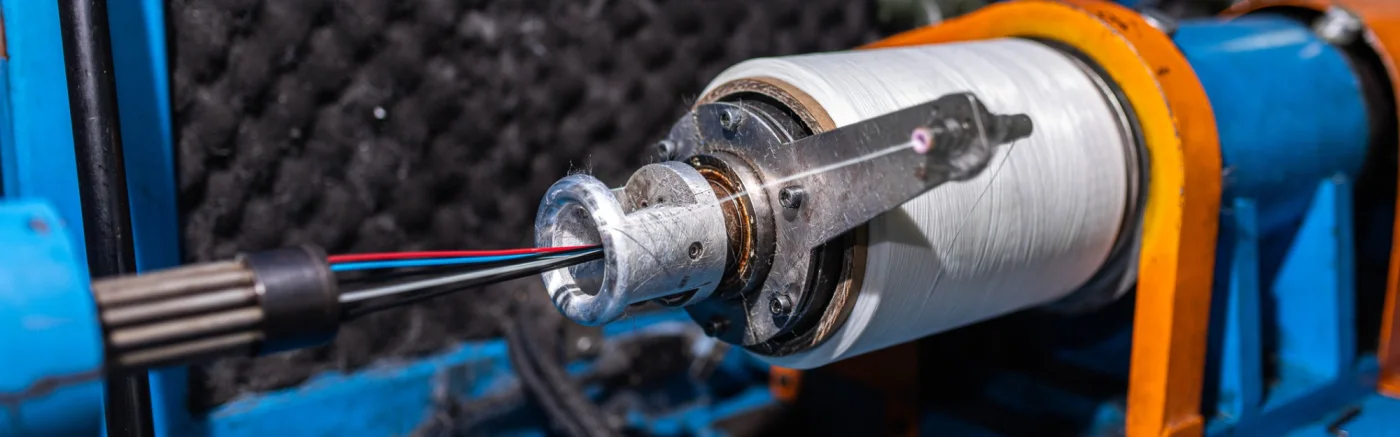
The Sumitomo Electric facility will manufacture high-voltage direct current, or HVDC, subsea cables.
Think of them as electricity motorways under the sea.
They can carry large amounts of power across long distances with relatively low losses, making them particularly useful for connecting offshore wind farms and different parts of the electricity grid.
The factory officially opened in October and is the first facility of its kind in the UK.
The UK Government says the investment will create 200 jobs and protect hundreds more.
Why build cables in the Highlands?
Nigg already has something difficult to recreate elsewhere: a large industrial port with direct access to the North Sea.
That makes it well placed for industries linked to offshore energy.
The area is also part of the Inverness and Cromarty Green Freeport, which is intended to attract private investment into energy and advanced manufacturing.
For a product that eventually has to be loaded onto specialised vessels and installed at sea, location matters almost as much as the factory itself.
The jobs go beyond cable production
A subsea cable plant needs production workers, but the employment picture is broader.
It also relies on electrical engineers, mechanical specialists, quality control teams, maintenance technicians, logistics staff and people responsible for testing extremely high-value equipment.
Current electrician and electrical jobs on Jober.uk show how broad this part of the labour market already is.
There is another layer around the factory too.
Ports, transport companies, offshore contractors and specialist service providers can all form part of the same industrial chain.
More broadly, candidates interested in infrastructure, engineering and maintenance can explore technical roles on Jober.uk.
Why are these cables suddenly so important?
Scotland produces large amounts of renewable electricity, particularly from wind.
But generating power is only half the problem. The electricity then has to reach homes and businesses hundreds of miles away.
Grid bottlenecks can mean wind farms are asked to reduce output even when conditions are good because the network cannot move all of the electricity to where demand is highest.
New transmission infrastructure is intended to reduce that constraint.
The UK is also thinking more seriously about what lies under the sea
The opening comes at a time when subsea infrastructure is attracting much greater attention.
Undersea telecoms cables carry around 99% of the UK's international data traffic, while subsea pipelines and electricity links are critical to energy supply.
The Government has therefore also proposed stronger rules for protecting this infrastructure from accidental and deliberate damage.
A factory can reveal where new industries are forming
The most interesting part of the Nigg project may not be the number of jobs alone.
It shows how the transition to a different energy system creates industrial activity in places that already have ports, engineering experience and offshore infrastructure.
The wind farm may be at sea, but many of the jobs behind it are on land.
In Nigg, one of those new pieces of the supply chain is now being manufactured in Britain for the first time.